Friday, December 25, 2009

Drivers Free Dell Gx620

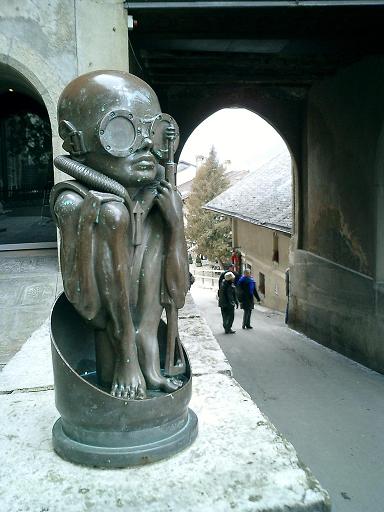
Il H.R. Giger Museum: Dove le tenebre sono veramente più veloci della luce


Jason V. © 2009 Brock, translated by Sabrina Abeni © 2009.

Gruyères, Switzerland: the same place-like-her name evokes images of a distant past; heritage forgotten, lost kingdom. -In the breathtaking scenery of the Alps, surrounded by herds of cows, sheep and beef farm even more unconscious desire for a life that seems to be easier. Although Switzerland is known for its precision in the manufacture of knives and watches, and its banking business, we do not seem to have more meaning neither the money nor the time ... Certainly there is good food (the Swiss chocolate known throughout the world and the fondue is a gastronomic invention Switzerland).
But there is also another important export product in Switzerland: H.R. Giger. Il brillante surrealista, originario di Chur, è indubbiamente uno dei più grandi artisti degli ultimi cinquant'anni. Divenuta celebre grazie al film Alien, la fertile e inquietante immaginazione di Giger trova le sue radici sia nel paese di Carl Jung che negli Stati Uniti, nel lavoro del più cosmico degli autori americani, H.P. Lovecraft.
Con un background in design industriale, le radicali immagini e il lavoro profondamente personale di Giger sono unicamente legate ai suoi particolari modi di espressione: l'aerografo e la scultura. A lungo sinonimo di bellezza oscura, la sua arte visionaria ha raccolto un incalcolabile numero di riconoscimenti ad Hollywood, compreso l'Oscar per aver creato Alien, insieme ad altre numerose creature nightmare for the cinema. If imitation is the sincerest form of flattery, and numerous smaller clones Giger are the boring head of a man from the singular genius, even among his peers.
My wife, Sunni, and I have had the opportunity to interview HR Giger (together with Carmen, his lovely wife) in view of a documentary that we have named Image, Refl ection, Shadow: Artists of the Fantastic (released in 2010 and produced by JaSunni Productions, LLC). The film traces the origins of some imaginary-started the Renaissance masters such as Bosch, Brueghel the Elder, over the centuries, with Goya, Böcklin, to the Surrealists and to our times (with Ernst Fuchs and the School of Fantastic Realism Vienna) and beyond. There have also included other luminaries such as Robert Venosa, Joe Coleman, Robert Williams, Roger Dean, and others.
In view of this undertaking, we have embarked on the path from the U.S. to Europe, spending some days in Switzerland for a meeting scheduled with this modern master, organized by his advisor Les Barany.
Our travels led us away: from Louisiana to Paris from New York to Prague. Now we were finally arrived in Switzerland (where the first day we had an extraordinary interview with the terrible sculptor / architect Bruno Weber) and we were to visit the HR Giger Museum in Gruyères.
was a revelation.
See also the work of Giger solo uno dei suoi enormi quadri- fa perder la testa: è come vedere che ogni parte della propria vita sia strabordante. Giger è un gentleman, divertente, ma anche serio. La sua arte, comunque, è perturbante; delicata e raffinata ma anche potente, erotica fino a diventare pornografica, ma anche intimidita da questo. È appassionata, spaventosa e disturbante.
Ogni pezzo del museo ha un'aria di famigliarità, le immagini sono state riprodotte molte volte durante gli anni in ogni tipo di libro e giornale. Le opere ad aerografo sono magistrali, tecnicamente sorprendenti, e raccapriccianti. I suoi lussuriosi lavori per il cinema sono incredibili e stranianti, mischiano l'organico e il meccanico in un'ibrida sintesi della vita: quello che Giger chiama i suoi “Biomechanoids”. Ma, secondo me, i suoi migliori lavori sono le sue sculture: sono perturbanti, meravigliosamente realizzate, dai concetti forti e perfettamente eseguite.
È facile perdersi nella mente di Giger, anche se quello che viene rivelato lì è veramente rivelato: esso scaturisce direttamente dall'osservatore. Dal momento che abbiamo bisogno di entrare in contatto con questo aspetto dell'Io (e non lo reprimiamo, né lo neghiamo), è difficile non vedere che Giger necessita che il suo pubblico osservi le sue creazioni- in modo che possano liberarlo: ciò chiude il cerchio tra creatore e spettatore, amore e odio, vita e morte. (Noi abbiamo notato questo ancora e ancora alla mostra di Giger tenutasi a Vienna alla KunstHaus Wien, mentre eravamo in Europa- la reazione dell'osservatore alle idee dell'immaginatore, che Lovecraft avrebbe chiamato “the dreamer”, furono da prima repulsione, quindi curiosità e alla fine attrazione.
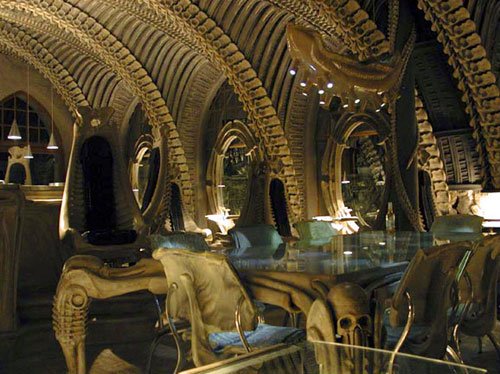
A un lato del Giger Museum c'è il Giger Bar, un luogo espositivo con elementi dal design pratico e arredato nella tradizione di Giger. Gli abitanti locali, molti di questi degli anziani galantuomini, vengono qui a indulgere nei loro quotidiani rituali con caffè e meringhe. Potrebbe essere una scena qualunque di una qualunque piccola cittadina del mondo occidentale, tranne che per le sedie prese dal progetto di collaborazione di Giger (insieme a Dan O'Bannon) con lo sfortunato Dune di Jodorowsky; muri decorati per sembrare l'intricato scheletro di un enorme serpente; pavimenti il cui design s'ispira ai bassorilievi, bizzarri e massicci tavoli dalla foggia di teschi; separé con i contorni di teste di bambini; arredamenti che sembrano usciti fuori dai più oscuri sogni di Lovecraft.
Lo scenario del Giger Bar, assommato all'intera esperienza di terrificanti locali , dona un'atmosfera surreale all'intero posto: essi sono tutti un po' epici, claustrofobici, dolorosi, energici, crudeli, bellissimi, affascinanti e stupefacenti come una visita al Taj Mahal, al Museo dell'Ermitage, alla Grande Muraglia o sulla superficie della luna...
L'essenziale è non perdersi.

DARK DISCOVERIES

JASUNNI

Saturday, December 5, 2009

Escape From Guantanamo Bay Bottomless

LA FANCIULLA SENZA MANI E IL VIAGGIO DELL'EROE

Midori Snyder (translation by Sabrina Abeni)


in heroic narratives, there is always a young man who leaves his childhood home and ventures into the unknown world where the attentive to the fantastic challenge. During the journey is tested its value as a man and hero. But when they were faced with the evidence, Back home again in triumph, bearing in his company of new discoveries and knowledge, maturity and often a magical wedding. The transformation from young man in a responsible adult will be confirmed when the hero marries his bride and magic takes over the kingdom.
Travel young women are no less heroic, though they are different. In folktales, the rite of passage from adolescence to maturity is confirmed by the marriage and assumption of adult roles. In traditional exogamous society, young women are asked to leave the house forever and become brides in foreign places, sometimes far away. In folk tales, adventure or the girl is catapulted into the fantastic world of ambiguity, knowing it would never return home. Instead, at the end of his dangerous and lonely journey, arrives at a new village or kingdom. Here, disguised as a servant with the dirty face, a girl employed to the stables or the care of the geese, completed his iniziazione come adulta e, come la sua controparte maschile, porta alla sua nuova comunità i doni della conoscenza, della maturità e della fertilità.
Nel linguaggio dei racconti popolari le idee astratte sono rappresentate da immagini concrete ed emozionalmente evocative. I tradizionali narratori di storie utilizzano degli eventi terrificanti per ricreare l'esperienza emozionale del dolore e dell'abbandono, nella quale la giovane donna non è solo mandata a compiere un viaggio lontano da casa, ma le viene anche preclusa ogni possibilità di ritorno. Nel motivo del “La Fanciulla senza mani” la ragazza viene mutilata da un membro della famiglia di cui si fidava e poi mandata via nella foresta come un animale. Non può più esserci ritorno nella casa d'infanzia, poiché è stata corrotta da una simile crudeltà. La fanciulla deve dirigersi verso una nuova destinazione, dove potrà ricostruire non solo le sue mani mozzate, ma anche la sua identità come donna adulta.
Il mio primo approccio con “La Fanciulla senza mani” fu la lettura di una suggestiva versione Xhosa del racconto, cioè “Il padre che tagliò le braccia alla figlia”, raccontata da Nongenile Masithatu Zenani, una narratrice Xhosa del Sud Africa, la fiaba era stata tradotta da Harold Schueb. In questa versione un padre vedovo sceglie di non risposarsi e delega alla giovane figlia il compito di occuparsi della faccende domestiche di cui prima si occupava la moglie. When the daughter reaches puberty, her father tries to force her to take on the role of his dead wife sex. She rejects his advances immediately, bursting into a loud cry that threatens to be heard by the neighbors. The next day the father took her into the woods. Once again, asks her to have sex with him. When she refuses again, the size of the arms with a knife and left to die in the woods. Bleeding and in pain, she suffers from loneliness until hunger forces her to continue the journey. Stunned, he begins to wander through a forest without end, up and down. "
Finally the girl with no arms reach a wall. After falling on his knees, striscia attraverso un buco nel muro e rotolo dentro il giardino dove si nutre, come un animale, di grano e pesche caduti. Per tre giorni, incapace di rialzarsi senza le sue braccia, rotola nel giardino mangiando dal terreno, finché dei servi la scoprono, sporca e coperta di fango, e la scambiano per un maiale selvatico. Essi stanno per sguinzagliarle i cani contro, quando i suoi pianti li fermano. Alla fanciulla senza braccia viene richiesto di raccontare la storia del crimine di suo padre per tre volte prima che sia soccorsa e portata in casa. Una volta lavata, la famiglia si accorge che, anche senza braccia, la ragazza è bellissima, e viene subito data in sposa al loro figlio. All'inizio questa pare una soluzione, soprattutto quando ella mette al mondo a child, but gradually run into problems. Without arms, the mother can not wait for news of a woman in domestic work and in-laws are beginning to complain. They want the child to take a second wife more than adequate, but she refuses. When her husband leaves town in search of a job, his family's write a letter, pretending to be his wife to do so, which states that she is pregnant again, but by another man. The young woman, unaware of the forged letter, receives two answers. The first when her husband asks her to know more about this unexpected pregnancy. The second comes after the first. This is written by his father who, having heard that her daughter survived, pretends to be her husband and threatens to remain at home if charred. The woman and even her in-laws are concerned about the threatening letter and reluctantly in-laws bind the child to his mother's shoulders and allow her to leave the house.
The young woman back then in the woods and start a second trip up and down in the endless forest, until, tired and thirsty, come to a lake. When he bends awkwardly for drinking, worried that his son slipping from her shoulders and drown, is a magical bird with a splash with each wing, restores his arms. Whole and able to do everything by himself, the young mother happily takes care of his son, feeds the baby, wash, dress e quindi culla il figlio tra le sue braccia nuovamente riacquistate. E quando è soddisfatta ritorna, col bambino in braccia, non dal marito, ma dai suoi vicini. Quindi attende che i suoceri sappiano del suo ritorno e che vengano a farle visita. Stupefatti dalla sua trasformazione, essi implorano il suo perdono e desiderano solo scrivere per conto suo al loro figlio. Ma il giovane uomo è già sulla strada di casa, preoccupata per la moglie e il figlio, convinto che qualcosa di terribile sia accaduto. Presto l'imbroglio delle lettere contraffatte viene svelato e il marito dichiara il proprio amore per la moglie.
Il motivo del “La Fanciulla senza Mani” mi ha accompagnato per molti anni e ho cominciato a cercare le altri versioni,e sono stata sorpresa dalla diffusione di questa complicata e violenta storia. Ne esistono versioni in tutto il mondo come “La ragazza senza mani” in Germania, “La ragazza con le mani mozzate” in Francia, “Oliva” in Italia, “Donna Bernarda” in Spagna, “La dama senza braccia” in Russia, “La ragazza senza braccia” in Giappone, “Acqua che sale, uccello che parla e albero che piange” nella Louisiana francese e molte altre. Mentre alcune sono meno sessualmente minacciose, molte sono anche più cruente della versione Xhosa: padri e fratelli mozzano gli arti di giovani fanciulle, o per la rabbia o come riscatto da consegnare al Diavolo. La ragazze possono sopravvivere nei boschi, qualche volta confortate dagli animali, o diventano loro stesse mezzi animali rotolando sul grano caduto o allungando il collo per cibarsi delle pere dall'albero del principe. Lì trovano la salvezza quando il principe scopre la ragazza sotto il fango e i capelli aggrovigliati e prova pietà per quel bellissimo viso. E dopo ci sarà sempre qualche complicato intrigo nel mezzo della storia, lo scambio delle lettere contraffatte che costringendo la donna senza braccia a ritornare nella natura dove avverrà l'atto finale del suo percorso d'iniziazione.
È una narrazione con uno strano singhiozzo nel mezzo. La brutalità della scena d'apertura sembra essere risolta quando la dama senza braccia è salvata nel giardino e quindi si sposa con un uomo or compassionate prince. But has not yet completed his transformation from adolescence to adulthood. It is not complete, it is neither the girl nor the woman who is destined to become. The narration makes it clear that without their own hands, she is unable to assume its role as an adult, can not do anything for herself, not even taking care of their child. Through the exchange of fake letters, the conflict is introduced in the story to take back to the girl on the path of initiation into the woods. Here the great heals, purifies the waters of the lake and she is reborn as a woman. All versions end with what is actually a second marriage. The woman, again integrated with the arms ridate by an act of magic, she became a bride magic, aligned with the creative power of nature. Her husband does not return immediately, but waits for him with his son in the forest or in a nearby house until he finds it. When he comes to propose a second marriage, is marriage between equals, based on respect and not pity.
Although I consider that the reason for "The Girl Without Hands" applies to the female rites of passage to adulthood, you will hear the echoes in the story of the abuse. The male hero may be temporarily depleted or robbed of his dynastic rights, but rarely are mutilated in revenge before undertaking their journeys. The narrators are well aware of the latent fear and constant threat of violence surrounding the lives of women in their communities, from childhood to maturity. The exploitation of these terrible images in the narrative may be extreme, but it represents the dark plot obtained by the union of female experiences. We are disgusted and outraged by the brutal actions not because these events could never happen, but because they happen frequently. The fantastic readily apparent in the history of magic to cushion the pain of mutilation, and leads the public away from the horror of the event and into the path of self-realization. Although the terror generated by the attack is short, the girl will be crippled for a long time, and this brings us back to the ongoing disaster that inflicts painful isolation. Survivors of abuse are well aware of this isolation, whether it's a child robbed of its innocence, or an adult unable to overcome the fear of betrayal of trust and love someone else.
You must perform acts of self-determination and power to restore a sense of integrity after the abuse. In a Breton version of "The Girl Without Hands," the heroine is crippled by his brother in a thicket of brambles and speaks out against crime with the calm confidence of a prophet. Without arms and bleeding, he says that he has stepped on the plug will essere rimossa solo dalla sua mano. In questo momento d'intenso dolore e tradimento lei è capace di avere una visione della sua vita ritornata integra. È per di più ha una visione del suo perdono di questo terribile crimine. La narrazione non riguarda la sua sopravvivenza come vittima, ma piuttosto il suo percorso come una viaggiatrice pienamente consapevole della propria destinazione.
Il bisogno di reintegrazione e riconciliazione non si trova solo in questa versione bretone del “La Fanciulla senza Mani”, che impiega il motivo del rovo. Coloro che abusano sono a loro volta isolati dalla vergogna e dalla brutalità dei loro atti violenti. Il fratello nella versione del rovo sopravvive a malapena durante l'assenza della sorella, il suo corpo is imprisoned and wounded by a tangle of thorn bushes that grow from the first that has hurt the heel. When the lady comes back with no arms to fulfill his prophecy, his transformation from girl to woman who possesses the creative power is confirmed when free his brother from the prison of thorns with the touch of his hands restored. In doing so, she removes forever corrupt the sign of violence, allowing him both to continue their new lives, unencumbered by the past. The girl without hands
continues to live in the imagination of modern writers, but as something very different about a girl caught in the middle of a complex rite of passage to adulthood and marriage. Become an icon of the dangers for a change, the threat of violence surrounding the lives of women, and our eventual resistance to undergo the transformation process. Whether we choose for ourselves or that we suffer because of the circumstances, the change requires both an act of destruction, a cut with the past, that an act of achievement, something more than faith, of an imagined future. But this path, consisting of dangerous and destructive moments, speaks eloquently of the real possibility of bankruptcy and the threat of being permanently injured. The exchange of fake letters denigrating the life of the young mother and her creative success represented by the birth of his son. If you believe in these letters, it should accept il fatto d'essere immeritevole e diventare complice nella propria deumanizzazione. Se capitola davanti alla voce esterna dell'autorità, rinuncia al rischio di trasformazione, rimane monca, alienata dalla sua parte veramente creativa.
Nel suo poema Girl Without Hands, Margaret Atwood richiede al lettore di esaminare il suo vaggio dimenticato dall'uso della seconda persona. Il “tu” è rivolto a una moderna donna professionista che cammina verso il lavoro, nonostante "the sunlight pouring over/ the seen world," di essere parte del mondo. Rimane chiusa in un circolo ("you have made, that clean circle/ of dead space you have made") ritenendosi sicura in questa prigione stagnante. Solo la ragazza senza mani può capire cose significa essere isolate, così lontane dal tocco di una piena e autentica partecipazione nella vita. Ma come il “tu” del poema, la ragazza senza mani della Atwood e mutilata, una ragazza che ha "Everything bled out of her" e che ti può raggiungere solo con le sue "absent hands" per offrirti conforto. Il poema tradisce la promessa di reintegrazione dei narratori, scegliendo invece di simpatizzare con coloro che sono rimasti psicologicamente mutilati.
Ma senza il dono finale di reintegrazione, rimane solo la brutale e orribile violenza della storia. La scioccante metafora della mutilazione tipica di questo racconto emerge con selvaggio realtà nella guerra civile in Sierra Leone nel 1990. Si tratta di una logorante e lunga guerra che ha killed more than 50,000 people, removed more than 500,000 refugees, and caused unspeakable atrocities to his people, producing a nation of women without arms. The army of the rebel RUF, which soldiers are recruited children who were themselves traumatized victims, advocates a campaign of mutilation of civilians, including cutting off hands and limbs to children in their first steps. Today, even though the war is over and has been established a Commission for Truth and Reconciliation to identify these war crimes, the situation of women in Sierra Leone remains desperate than ever. Poverty, illiteracy, and the shame associated with rape and mutilation makes it difficult to imagine a society reinstated in its entirety. Yet there are glimmers of hope. The recent election of Ellen Johnson-Sirleaf as president of Liberia, a country that had participated in the civil war in Sierra Leone, making it the first female president in Africa, suggests the possibility of a life change for women in Africa West. But as in the fairy tale, this second trip, after an interlude of partial recovery, remains a dangerous road, crowded with injured women and children traumatized, their pursuit of justice is merely the first step towards the creation of a genuine peace. For many women in Sierra Leone only weaves between education and political development could lead to the rehabilitation and second chances.
La Fanciulla senza Mani, nonostante la sua vulnerabilità, la sua storia violenta e il suo arduo e solitario viaggio, ha anche ispirato uno spirito meravigliosamente ribelle e ringiovanito nelle nuove interpretazioni della fiaba nella poesia moderna. Nel sensuale poema di Rigoberto González, The Girl With No Hands,è una di quelle rare creature, una donna incantatrice. La ragazza paragona le sue mani tagliate alle portafortuna zampe di coniglio essiccate, ma progetta la propria vendetta. Questa è una furba ragazza senza mani: "Resolute, you age with ingenuity, learning to eat/ right off the branch, nibbling apple, apricot, and pear without separating fruit from stem." Trova il piacere e il sesso nel giardino con il figlio del cacciatore: "The plan that's elbows and knees and played with four clumsy / heels That For all random Reaching Their rhythms make the sweetest." The girl without hands is not afraid of his brother, but finds its strength in your heart smart with "delectable defiance." Not only can you create for itself a second pair of hands, but above all she has "legs, torso, head, and a bear trap of a jaw to bite the hands That feed her. "
In Conversation With My Father, Ellin Lipkin speaks of wise and clever girl who will not allow the father to cut his hands. He goes into a hardware store, considered a male world, to buy a drill. Here, in the midst of threatening tool to "brag That metal shapes of power" riflette sul suo rapporto col padre, su come sarebbe stato più facile se fosse nata, come la dea Atena, scaturendo dalla mente del padre come "sweep of clean logic." Ma lei non è Atena e suo padre l'ha formata come qualcosa di più fragile: una Pollicina, o una ragazza dalle precarie braccia di porcellana. Nella forte violenze della fiaba, è il padre che taglia le mani alla figlia perché lo desidera, ne ha bisogno. Ma in questo poema la donna che avrebbe dovuto perdere le braccia rifiuta di accondiscendere. Non vuole permettere che l'essenza della natura propria della sua identità adulta inizi tramite un atto di potere ai suoi danni. Afferma che "each pointed finger is my true weapon,"rifiutandosi di permettere al padre di immortalare un momento decisivo della sua vita attraverso la mutilazione delle sue mani. Nelle versioni tradizionali del racconto l'atto violento è essenziale per separare la ragazza dalla sua casa e dalla famiglia, costringendola a intraprendere il suo percorso di maturazione. Ma la moderna ragazza senza mani ha cominciato a chiedersi se noi dovremmo permettere che le nostre vite siano determinate da tali esterni atti di potere, atti che enfatizzano la nostra vulnerabilità piuttosto che le nostre forze personali.
Ho cominciato a pensare che narrazioni brutali come quelle su La Fanciulla senza Mani parlino alle donne non solo quando sono giovani e poste fuori da questo primo rito di passaggio, ma anche attraverso tutta la loro vita. In Donne che Corrono con i Lupi, la psicologa Clarissa Pinkola Estes presents a fascinating analysis of this tale, showing the leading role of the reason for the girl without hands in the psychological life of a woman
"The Girl Without Hands" is about the initiation of women into the forest through the ritual of the underground resistance. The word "resistance" seems to mean "continue unabated," and if it falls in the tasks laid down in the story, it also means "to make strong, robust, vigorous and resolute," and this is the key point of the story, and the generic nature of long psychic life of women. We do not go much further to go forward, we are doing something.

to follow the example of the girl Hands-free is an invitation to cut away the old identity and destroy the habits again and again through the forest. Here we encounter every time new identities that lie ahead. In the story the girl without hands sits on the shore of a lake that restores its entirety, where he learned to cherish and care for her child, as physical manifestations of his creative power. Each time we follow the girl without hands she confronts us with our creative I am. In an interview with Vicci Bentley Magazines.org.uk for Poetry, the poet Vicki Feaver discusses the influence of the fairy tale "The Girl Without Hands" has on his writing: I have read

psychoanalytic interpretation made by Marie Louise von France in the book, The feminine in fairy tales, in which descriptive treats the story reflects the way women cut off their hands to live their lives through the powerful and creative men. They need to go into the forest, nature, to live by themselves, to recover their power. The child in the story represents the creativity of women that only women can save.

restored using the mother's voice in his poem "The Lady with no hands," Feaver celebrates the rebirth of women's creativity. Returned to its entirety, the young woman sits on the shore, rediscover the pleasure of taking care of our beautiful baby. But as soon as the child falls asleep "her heat passing / into my breast and shoulder / the breath I could not believe in, "the new mother begins to cry, remembering the painful journey that has taken to reach this river. But the poem ends triumphantly, even if he remembers with tears that" my hands That sprouted / in the red-orange mud "these are the same hands" write this, grasping / [the child's] Curled fist. "The lady with no hands has become the poet who, by articulating their own creative process, collects the fruits of this work through his son. Feaver writes, "In the end I chose the voice of the lady with no hands-same as if I were writing the poem with those hands grow back in time, that year saved his work, his son ... I seemed to have through lo stesso processo infinito di tagliare via le mie mani e vederle poi ricrescere”.
Alla fine questo potrebbe essere la più illuminante lezione della fanciulla senza mani. Ella c'insegna non di aver paura; perché anche se siamo ferite, a volte abbandonate, c'è una forza nel nostro potere di riportare noi stessi all'interezza- non una sola volta ma più volte durante la nostra vita. C'illumina sui passi necessari da fare quando ci troviamo di fronte a soluzioni parziali, permettendoci di fare esperienza, attraverso le immagini della fiaba, degli effetti stagnanti della nostra capitolazione. Ha viaggiato con noi durante quei periodi in cui ci siamo avventurate nel bosco, con il bambino sulle sue spalle come segno delle nostre nuove e vulnerabili identity. And she is here to witness the moment of our reorganization, when finally the new hands to stretch our voices, our lives and our future.


the author: Midori Snyder is the author and co-director with Terri Windling dell'Endicott Studio, and the Journal of Mythic Arts. Writer, poet, essayist, his books have been published in English, French and Dutch. For more information, visit his website In the Labyrinth.

text Copyright © 2006 by Midori Snyder. Translation Copyright © 2009 by Antonella Sabrina Abeni

Friday, December 4, 2009

History Of Immanuel Chapel In Largo Florida

CHRIS DYER: LO SKATEBOARDER VISIONARIO


Chris Dyer grew up in Lima, where he lived until age 17, employed in activities such as surfing, skateboarding and extreme fanaticism for football (along with his former gang, Sepulchre). Then he left Peru to Canada and went to study Art College, where he calmed his restless soul with experiences such as gardening. He now lives in Montreal, where he claims to continue on its path towards self-realization.
His art is closely linked to his passion for skateboarding, working for companies that produce them, designing graphics.
For his career, he has exhibited in both collective and personal exhibitions in countries like Peru, Mexico, Belgium, in San Francisco, Seattle, in Britisch Columbia, Toronto, Quebec City and Montreal.
Chris is also a great traveler and has visited 24 different states in the world, it asserts that all these trips have enriched the culture. It is considered now a single body with the Absolute, through meditation, travel and natural experiments.

When I left Lima in the eighties, skateboarding was part of my childhood. Many people see skateboarding as a rebellious activity, where teenagers go around the city to destroy everything they find, but in reality, the skateboarders are visionary artists who see the streets of their city as if they had potential for a park their movements espressivi. Oggetti morti come le scale, i corrimano, i bordi dei marciapiedi e i davanzali, diventano ostacoli divertenti con cui giocare ed eventualmente da conquistare. In questo modo gli skateboarders, a dispetto della loro terribile reputazione e i loro problemi con gli uomini di legge, non sono distruttore ma creatori che aggiungono vita e magia alle nostra giungla morta.
La cosa principale che è cambiata dagli anni Ottanta sono gli stessi skateboard. Quando ero un bambino erano così grandi e spessi che non potevo fare dei gran trucchi, ma nello stesso tempo, con essi non si poteva mai frenare, per cui ritenevo valesse la pena l'uccisione di un albero per avere questo giocattolo. Al giorno d'oggi, gli skateboard sono più piccoli e fini, make it easier to do many tricks, but also slow down. An average skateboarder can break his instrument in a week or a month, it depends. So now more trees are killed to satisfy the needs of this fun activity, which is becoming increasingly popular.
Since 2000 I have collected such a number of broken skateboards that I was no longer able to throw in the trash. They were companions of my many adventures, so I concentrated on finding a way to make them "useful". That was the year I started to use their wood table for my painting, which I do today. In this way, recycling wood and give eternal life to my skateboard. This "skate art" probabilmente mi sopravviverà, continuando a far nascere il sorriso sul volto della gente e onorando la vita di quegli alberi che sono morti per essa.
Quando si passa all'arte applicata allo skateboard stesso, le cose non sono molto cambiate. Negli anni Ottanta non potevi non trovarne uno senza qualcosa di negativo disegnato sopra. Teschi, serpenti, mostri, diavoli, ecc, dando il messaggio che tutto ciò che è malvagio è “cool”. L'industria dello skateboard, ancora oggi, manda il messaggio che gli skateboarders sono persona “cattive” che distruggono il mondo come criminali. Da parte mia ho invece imparato che lo skateboarding è una bellissima meditazione sulla libertà e sull'espressione. Così when I started made the graphics industry for a number of San Francisco and elsewhere, I wanted to show the positive side of our sport.
However there are not the only artist to skateboard usually opt for images of positive type. It's hard to go against the tide, but in reality my art stands out in this world. Over the years I have worked for this industry, I created more than 50 skateboard with visionary images on spiritual, unity of religions and cultures, respect for nature, etc ... My intention is to influence the young skateboarder, tell him he can be "cool" that is good spiritually committed without the need for a particular religione. Questa risposta è stata lenta ma cresce col tempo e mi rende felice sentire un giovane affermare che la mia grafica ha cambiato la sua percezione della vita. Secondo me, non c'è maggior servizio che elevare i sentimenti nel nostro mondo. Pace!


(Articolo di Chris Dyer, tradotto da Sabrina Abeni)

Sunday, November 29, 2009

Anti Fungal Dietkaufmann

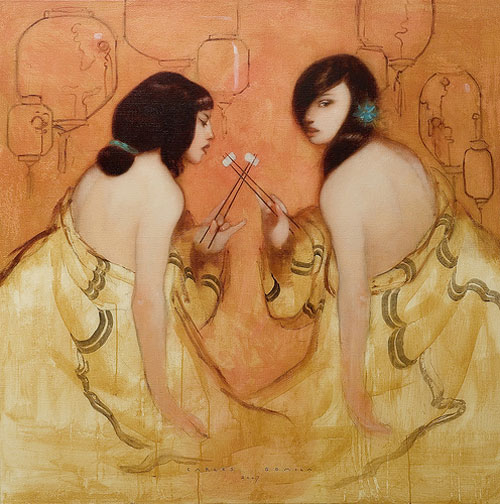
CARLES GOMILA: BELLEZZA E ARMONIA NELL’ARTE CONTEMPORANEA


Nato nell’isola di Minorca nel 1978, fu attirato dalla pittura di 21 anni.La sua pittura ricerca l’eleganza, la misura, la suggestione e l’energia. Si descrive come portato a studiare i classici, per questo avrebbe avuto sempre rapporti conflittuali con i suoi insegnanti, più portati a incoraggiare esiti avanguardistici, si sente perciò libero di rappresentare la figura umana, utilizzandola come strumento onirico, che porta a vagare con l’immaginazione. Cerca perciò di ricreare l’aura dei classici, attraverso una dimensione atemporale. I suoi punti di riferimento sono: l’arte greco-romana, la linea di Ingres, il colore di Redon e l’essenza di Velazquez.


SITO DELL’ARTISTA

Quando hai scoperto che l’arte avrebbe fatto parte della tua vita?


Quest’idea crebbe a poco a poco. Da quando ero piccolo, mi affascinava lo studio di My uncle, the painter and engraver Blas García and I grew up with this vocation latent. Nevertheless, first dreamed of being a postman, I liked the idea of \u200b\u200bwalking to work with cart, dispensing information. After I found myself in a phase ambitious and wished to be a vet (I had always been in love with the cats), but this sign finished studying the sciences I was not able to add two numbers without using her fingers and drew in class. Finally I entered the Academy of Fine Arts in Barcelona with the intention of training as an illustrator, an illusion which I rejected, and almost without realizing it, I began to get into art galleries.


Sottolinei spesso l’importanza di studiare i classici. È possibile analizzare le loro opere, creando però qualcosa di originale?


Nessuno è capace di creare partendo da zero, la creazione è una revisione del precedente, un novo indirizzo sotto una prospettiva più attuale. Il mio amore per i classici mi ha portato al loro studio e a farmi contaminare dalla loro aura. Mi piace. Una parte di me s’identifica con questo universo antico, ma più come evocazione poetica che come desiderio. Studiare i grandi classici attraverso la contemplazione mi è risultata un’esperienza tanto soddisfacente quanto produttiva, ma non sto sostenendo che si debba raccomandare questa pratica come sistema.


Quale parte ha la funzione dell’influenza ha l‘arte orientale nelle tue opere?


La sua funzione è innocentemente accessoria: il fascino per l’esotico.

L’esotico, secondo me, è ciò che ha un’aura magica, di mistero. È sinonimo d’ignoranza ritenere che

Ciò che è lontano è sempre migliore di ciò che è vicino, e l’immaginazione lo converte in qualcosa di eccezionale, in tutto ciò che ci piacerebbe fosse.


Pensi che l’uso della figura dia ancora la possibilità di esprimere qualcosa di nuovo?


Forse, però è una questione che non mi coinvolge, perché il fine del mio lavoro non è l’innovazione, ma la ricreazione e il diletto. Penso sia una volgarità cadere nell’antiquato compromesso dell’innovazione, mi sembra inoltre una riflessione un po’ distratta quella che si fonda sulla negazione e non sulla creazione. Lo sperimentale si caratterizza per essere uno stato di transizione tra la maturità e il fallimento. La ricerca attraverso l’alternativa è uno slancio lodevole, ma non m’interessa. Il mio lavoro è molto più umile.


Le tue opere suggeriscono una sensazione d’armonia. Perché una scelta così inusuale in un periodo in cui si cerca di realizzare immagini perturbanti, come un pugno nello stomaco dell’osservatore?


La forza e il carattere si confondono troppo frequentemente con l’essere sgradevole. L’asprezza è sempre facile e ricorrente, non ho mai compreso gli artisti che si rifugiano nell’angustia, tantomeno il loro pubblico. Pratico l’economia della sofferenza, tanto nella mia vita quanto nel lavoro. Prima di tutto desidero trasmettere quello che mi risulta piacevole e riviverlo in ogni opera, come una leggerezza della vita mediterranea.


Qual è la funzione del colore nelle tue opere?


Pongo le risorse plastiche sotto l’imperativo della figura umana. La figura comanda, io faccio quello che mi chiede. Normalmente utilizzo grandi aree di colore per generare impatto, e delicate sfumature per riprodurre le qualità della pelle umana.


Fai degli schizzi preparatori o dipingi direttamente sulla tela?


Quasi mai lavoro con degli bozzetti, perché mi annoiano. Eseguo direttamente sopra la tela un disegno col carboncino, prima della pittura, che mi permette di adattare il disegno, in modo da conseguire l’intenzione dell’opera in tutta la sua freschezza originale. Non è nemmeno frequente che interpreti modelli, fotografie o riferimenti of nature, always work with the imagination.


What is beauty for you?


A work is beautiful when it want to hang on the walls of my house. What I find enjoyable, I suggest that feelings before thoughts. My quest for beauty has always intuitive and irrational, I do not dare to rationalize it too much. From Plato to the present day the aesthetic discourse has grown almost without obtaining any consent, from here we deduce that apiretico. Perhaps you have forgotten this discussion of the arbitrariness of personal taste on the whole theory.


It was difficult to enter the art market?


In this small island in the Balearics, Menorca, I was easy. Here bargaining with the galleries are very nice and I have always been supported. Off the island, was not so easy. I'm learning, little by little, how it works. In the Faculty of Fine Arts there was no discipline in what is taught the art market. It is obvious, because if the teachers had had any idea of \u200b\u200bhow the market would have left teaching for a living painting.


(Sabrina Abeni)

The Demand For A Product Of Cologates

PETER GRIC: I MONDI DELL’IMAGINAZIONE


Gric Peter was born in 1968 in Brno (Czech Republic) and immigrated to Austria in 1980.

From 1988 to 1993 he studied under professor Arik Brauer at the Academy of Fine Arts in Vienna

. She married

Lenka Ferjancová in 2002 and currently lives and works in Vienna with his family

.


Gric Peter is known for its mysterious abandoned futuristic architectural landscapes. He studied under professor Arik Brauer at the Academy of Fine Arts in Vienna, one of the original members of the Vienna School of Fantastic Realism. Peter, a sua volta, rapresenta la successive generazione di artisti influenzati da questo movimento.

Peter ha esposto insieme altri famosi artisti come H R Giger ed è un membro del Labyrinthe group.

Ha illustrato numerose copertine di libri, soprattutto di genere fantascientifico o fantasy. Appartenendo alla più giovane generazione di artisti non ha disdegnato la tecnologia digitale e ha anche lavorato con modelli 3D. Questi sono stati da lui utilizzati per visualizzare alcuni dei più complessi lavori, prima di realizzarli in pittura.

Il 2007 lo vede impegnato in uno stage di design per la produzione di SamPlay "Hamlet in Rock". (from “Wikipedia”)

1) Qual’è il tuo rapporto con le nuove tecnologie?


Quando ho comprato il mio primo pc, nella metà degli anni Ottanta, un Atari 800 XL, immediatamente cominciai a giocare con la grafica digitale. Le possibilità erano molto limitate e ho dovuto imparare dei programme per creare le più semplici figure sullo schermo. Sognavo d’essere capace di creare mondi tridimensionali con milioni di pixel e colori. Ci sono volute comunque un paio d’anni e un nuovo computer, un Commodore Amiga, prima d’essere capace di usare questa tecnologia per modellare le prospettive per le mie composizioni architettoniche come “Torre VIII” dal 1992 (http://www.gric.at/gallery/bild052.htm). Adesso il computer è diventato uno strumento essential to my painting.


2) As the daughter of a painter I often use the computer for his creativity, but in Italy not all artists understand this tool, thinking that penalize the real talent. This view is also present in your art context?


Not really. Most artists I know appreciate this tool, at least the younger generation. but many of them do not use very large in combination with traditional painting.


3) Obviously the Italian cultural context is obsolete in this area :-) I found some of your landscape elements, such as eroded rocks, alcune reminiscenze dei paesaggi desolate dei pittori romantici, come Friedrich o Constable. Ci sono alcune connessioni?


Sento una sorta di beatitudine nei passaggi rocciosi sopra una vegetazione arborea. Amo gli altipiani, forse perchè questo tipo di paesaggio ha un proprio orizzonte che è molto al di sopra del mondo “civilizzato”. Questa calma e libertà che io percepisco nella natura, specialmente nelle montagne, è così opposta a quello che sento nella città. Questa tensione è forse l’oggetto di alcuni dei miei dipinti. Comunque non sono mai stato veramente interessato alla pittura di Friedrich o Constable.


4) Invece i tuoi edifici abandoned can be interpreted as symbols of the decadence of society?


I do not think that society is decadent. He's just constantly changing, and after all I hope that changes for the better, although very slowly. I do not really explain why it feels the need to paint these buildings unnecessary (and all other things). There is no Declarations behind this, there are symbols with hidden meanings. The interpretation is clear: "Come and enjoy the unknown." Perhaps the painting is just an attempt for me to remember the places where I've never been.


5) Thus, "the interpretation is free ... It is for this reason that the more I look at your paintings and more I find new details hidden? Seek the active participation of the observer to build artistic meanings?


I do not care about the artistic meanings, symbols and hidden messages. I think if someone has something to say, should speak a language Chiado instead of confusing the listener with symbols and hidden items. So do not tell any story with my paintings and I do not provide any answer to any question intellectual intellectual. I want to come in and try out new spaces, rooms, shapes, words and sizes. I do not want to create words and thoughts, but the silence. You can follow me, but do not expect any explanation.


6) I have noticed in your more recent works, a sort of transition from a preference for buildings and landscapes Meggiorato use and emphasis of the human figure. Why this change?


Sometimes I love to experience the human body, particularly for women. I'm trying to weave with the artificial, the inorganic or mineral structures, and although the figures are often highly fragmented and modified, I have the need to perceive the beauty and eroticism of the human body. This combination, however, is often very problematic. Maybe it's just a tribute to my testosterone, I do not know.

7) A tribute to your testosterone? Maybe it's the same for all artists :-) gl

Speaking instead of art and culture in general, do you think the current issues and aesthetics can coexist in the same art?


Why not?


8) One last question, after leave you free at last :-)

What, in your opinion, visionary art?


"Visionary Art" is another category, another drawer, very useful to maintain order. At any drawer you choose for my images, they are reflections of questions about existence itself. It is a panopticon per la mia curiosità insoddisfatta. ma è anche gioia di creare, la gioia di estendere la mia realtà.

1) Qual’è il tuo rapporto con le nuove tecnologie?


Quando ho comprato il mio primo pc, nella metà degli anni Ottanta, un Atari 800 XL, immediatamente cominciai a giocare con la grafica digitale. Le possibilità erano molto limitate e ho dovuto imparare dei programme per creare le più semplici figure sullo schermo. Sognavo d’essere capace di creare mondi tridimensionali con milioni di pixel e colori. Ci sono volute comunque un paio d’anni e un nuovo computer, un Commodore Amiga, prima d’essere capace di usare questa tecnologia per modellare le prospettive per my architectural compositions as Torre VIII "from 1992 (http://www.gric.at/gallery/bild052.htm). Now the computer has become an essential tool for my painting.


2) As the daughter of a painter I often use the computer for his creativity, but in Italy not all artists understand this tool, thinking that penalize the real talent. This view is also present in your art context?


Not really. Most artists I know appreciate this tool, at least the younger generation. but many of them do not use very large in combination with traditional painting.


3) Obviously the Italian cultural context is obsolete in this area :-) I found some of your landscape elements, such as eroded rock, some reminiscent of the desolate landscapes of the romantic painters such as Constable and Friedrich. There are some connections?


I feel a kind of bliss in the rocky passes over a tree line. I love the highlands, perhaps because this type of landscape has its own horizon, which is well above the "civilized" world. This quiet and freedom that I perceive in nature, especially in the mountains, is so contrary to what I feel in the city. This tension is perhaps the subject of some dei miei dipinti. Comunque non sono mai stato veramente interessato alla pittura di Friedrich o Constable.


4) Invece i tuoi edifici abbandonati possono essere interpretati come simboli della decadenza della società?


Non penso che la società sia decadente. Sta solo cambiando continuamente, e dopo tutto spero che cambi in meglio, anche se in modo molto lento. Non so veramente spiegare perchè senta il bisogno di dipingere questi edifici inutili (e di tutte le altre cose). Non vi è alcuna dichirazione dietro questo, non ci sono simboli con significati nascosti. L’interpretazione è libera: “vieni e godi dell’ignoto”. Forse la pittura è per me solo un tentative per ricordare luoghi in cui non sono mai stato.


5) Così “l’interpretazione è libera”... É per questo motivo che più guardo i tuoi quadri e più trovo nuovi particolari nascosti? Cerchi la partecipazione attiva dell’osservatore per costruire significati artistici?


Non mi preoccupo dei significati artistici, dei simboli e dei messaggi nascosti. Penso che se qualcuno ha qualcosa da dire, dovrebbe parlare un linguaggio chiato invece di confondere chi lo ascolta con simboli ed elementi nascosti. Così non racconto nessuna storia con i miei quadri e non fornisco nessuna risposta intellettuale a nessuna questione intellettuale. I want to come in and try out new spaces, rooms, shapes, words and sizes. I do not want to create words and thoughts, but the silence. You can follow me, but do not expect any explanation.


6) I have noticed in your more recent works, a sort of transition from a preference for buildings and landscapes Meggiorato use and emphasis of the human figure. Why this change?


Sometimes I love to experience the human body, particularly for women. I'm trying to weave with the artificial, the inorganic or mineral structures, and although the figures are often very fragmented and changed, I feel the need to la bellezza e l’erotismo del corpo umano. Questa combinazione, tuttavia, si rivela spesso molto problematica. Forse è solo un tributo al mio testosterone, non so.

7) Un tribute al tuo testosterone? Forse è lo stesso per tutti gl artisti :-)

Parlando invece dell’arte e della cultura in generale, pensi che i temi attuali e l’estetica possano convivere nella stessa arte?


Perchè no?


8) Un’ultima domanda, dopo ti lascerò finalmente libero:-)

Cos’e, secondo te, l’arte visionaria?


"Arte Visionaria" è un’altra categoria, un another tray is very useful to maintain order. At any drawer you choose for my images, they are reflections of questions about existence itself. It is a panopticon for my unsatisfied curiosity. but also to create joy, the joy of extending my reality.


(Sabrina Abeni)

Shelly Martinez And Jewel Denyle

Laurence Caruana: VISIONS THROUGH THE AGES


Laurence Caruana is the third son of Maltese parents who met and married in Toronto, Canada. After completing his studies in German and ancient Greek philosophy (BA, University of Toronto 1985), he learned the tecniche classiche di pittura presso l'Akademie der Bildenden Künste di Vienna (Accademia di Belle Arti di Vienna 1990).

Caruana poi ha iniziato un’esistenza itinerante, vivendo a Toronto, Malta, Vienna, Monaco di Baviera, Monaco e Parigi. In quel periodo, ha perseguito attivamente l'esperienza visionaria (sogni, enteogeni) come fonte per la sua pittura e scrittura. Dopo un incontro con la sua fidanzata francese a Monaco di Baviera, L. Caruana si stabilisce a Parigi. Nel 2000 ha incontrato Ernst Fuchs della Scuola di Vienna del Realismo Fantastico e, successivamente, è stato apprendista sotto di lui per un anno, lavorando nel suo studio a Monaco e Castillon, come pure per la cappella di San Egyd a Klagenfurt

Caruana attualmente lavora nel suo atelier a Bastiglia, e spesso si reca all'estero per esporre le sue opere e fare lezioni di presentazione su Visionary Art. L'anno 2008 segna la pubblicazione di Enter Through the Image(Recluse 2008, ISBN 978-0-9782637-2-0) e il suo primo seminario di pittura Visioni in Tecnica Mista.


Il linguaggio visionario è un linguaggio perduto, come cifre indecifrabili. Ma si nasconde sotto tutto ciò che noi sogniamo ogni notte. È invisibile appare ogni volta che la visione di immagini scorre in modo significativo. Esso emerge dal trance, dalla contemplazione, dal mito e dalla follia. Questa antica immagine-lingua, altrimenti dimenticata, è ora parlata una volta di più ... ( the Manifesto of Visionary Art, trans. Sabrina Abeni)

What it means to be an artist for you?

When you feel for the first time an artist, you must learn to be faithful to your way of life and the visions that guide you through it. This means that you must pay attention to your dreams, fantasies and visions to actually follow the paths that you suggest, although they are far removed from anything you were prepared. No one will be convinced that you're an artist for at least the first ten years, so you have to believe in yourself. But if your work is apparent and people started to pay attention, then you see your role expand. A visionary artist, which I believe, apre gli occhi degli altri su quel mondo che altrimenti rimarrebbe nascosto. Non intendo riferirmi a mondi fantastici, ma a quegli aspetti del’esistenza che sono importanti, ma rimangono generalmente ignorati, come la trama della vita, le sue interconnessioni nascoste, o la sua unità di base.


Quali sono le tue influenze artistiche?

Ho assorbito le influenze di centinaia di artisti, alcuni conosciuti, molti sconosciuti. Il mio occhio vaga finché non si sofferma su un certo stile, un simbolo o un’armonia cromatica. Da qui, scavando sempre più nel profondo, si arriva all’opera di certi artisti e si crea una sorta di dialogo. Questo si sviluppa in un dialogo visuale tra la loro arte e la mia, ma il dialogo può essere anche verbale. Può suonare strano, ma io sento la voce degli artisti ogni volta che guardo i loro lavori. Una voce interiore parla alla mia testa e mi dice che dovrei concentrarmi su questo o quello… Io mi vedo seguire un percorso che traccia una specifica linea di sviluppo attraverso Hieronymous Bosch e William Blake, fino Gustave Moreau e Ernst Fuchs. Posso riconoscere e segnare le similarità nelle loro opere. Ma l’arte cristiana occidentale è solo una sfaccettatura del più grande gioiello della visione. Ho viaggiato molto, perché volevo veramente assorbire e comprendere l’arte sacra di altre culture- l’antico Egitto, l’induismo, il buddismo, i bizantini, the Maya ... Each of these traditions has deeply influenced my art, both stylistically and symbolically.


How did the idea for a painting?


I'm open to ideas from every source. I had the rare good fortune to receive some of the images in a dream, where the painting has been completely formed. Or I was only given the combinatorial core of the images and I suddenly starting from this. After thirty years of recording my dreams, I can say that those with paintings rarely come fully formed, two or three times a year. So I also travel with entheogens mental. Despite the best intentions, I never knew what visions would have resulted, or if they could be used in painting. The art of other cultures is also a great inspiration, especially when I travel and visit holy places such as temples or pyramids. All these experiences are combined when I entheogenic experience in these sacred places, or when it subsequently dream ...


Why do so many artists are inspired by Oriental art?


The Renaissance was born from the encounter between two completely different cultures - the ancient Greek art and the art of Christianity, which until then was largely Byzantine. I think there is always a great burst of creativity quando le culture si scontrano e si aprono quindi a nuove influenze. Noi oggi siamo esposti a talmente tante culture diverse - sia antiche come quella egiziana, minoica o maya, sia attuali come quella orientale, amazzonica o le culture tribali. Siamo fortunati a vivere in un tempo così vario, ma gli artisti devono rispondere in modo creativo per alle nuove influenze, assorbendole e integrandole nella loro tradizione culturale.


Quale ruolo ha avuto Ernst Fuchs nello sviluppo degli artisti visionari?


In molti modi Ernst Fuchs rappresenta una contro-corrente rispetto al Modernismo. Ha uno sguardo artistico molto penetrante che guarda attraverso secoli e anche millenni di arte. Quindi, i suoi dipinti riescono a combinare influenze, idee e stili da talmente tanti punti di vista della storia dell’arte. Dove il Modernismo rigetta la maggior parte della storia dell’arte, Fuchs la incorpora, seguendo il dictat “includi e trascendi”. Le sue ricerche sul colore vanno al di là dei nostri tempi. Molti dei giochi visuali che crea- come le figure ampliate, le forme distorte o combinare i colori attraversi le velature- abbattono i confini della nostra percezione; essi lastricano la strada per i nuovi artisti. Quello che ho imparato soprattutto, lavorando con Ernst Fuchs, è stato il “vedere visionario”. Sicuramente anche imparare la tecnica mista è stato molto importante, ma la tecnica non servirà veramente your needs unless you do not learn to expand your vision to see shapes and colors in ways beyond the usual perception. This is what I got from Fuchs.


What is the role of technology and the kind of inspiration in your art?


As I said, I learned the technique from mixed Ernst Fuchs working side by side with him in Monaco for a year. I learned a method of painting through the history of European art until the time of Van Eyck. Essentially, the mixed media painting builds in layers. Eventually I realized that building a painting, layer by layer, to a visionary way of seeing. For example, you can only create depth building size and color of these dimensions of color, color velandolo with semi-transparent layers on top of each other. The technique allows you to see new depths, to view, play and improvise ...


I noticed that both you and Philip Rubinov Jacobson have come this year in Italy for seminars. Is it because you know that in Italy the visionary art is almost unknown?


I held the first of a series of seminars this summer in Torri Superiore, an eco-village in the Ligurian Alps, not far from where I worked with Fuchs. The seminar is called "Visions in Mixed Technique" as it pursues visionary ways of seeing, and also taught the different techniques. I was lucky enough to attract a really enthusiastic and talented group from around the world - Argentina, Turkey, United States, New Zealand, Norway and, of course, Italy.

I think they came out so many people from many different backgrounds, because there is a real need right now to gather in creative groups. The unique location and timing of these meetings was also important. I chose Torri Superiore, because it is a small eco-village where the residents have a deep awareness of what is really happening to the planet and how we must change our way of life in order di aiutarlo. Credo che uno stile di vita ecosostenibile e l’arte visionaria perseguono gli stessi obiettivi in diversi modi. Sempre di più sono le persone che hanno visioni di un mondo nuovo, e cercano i mezzi per rappresentarle. Le accademie d'arte non toccano questo tipo di cose, così questi seminari colmano il divario.

L'Italia è fortunata ad avere un paio di accademie private a Firenze che insegnano ancora che le tecniche classiche. Ma non incoraggiano affatto la visione o l’immaginazione... Ancora, l'interesse per l'arte visionaria è in aumento in Italia, così come lo è ogni altro luogo. Non sono d'accordo con te quando dici che 'è sconosciuta in Italia'. Piuttosto, i mediatori di potere dell’arte simultaneously, in Italy as elsewhere, do not recognize it because they fear it. Therefore does not appear in the main media channels such as TV or newspapers. In the meantime, finds expression through other means. Betty Books in Bologna has published a great book called True Visions visionary art, which includes the Italian artist Matteo Guarnaccia has long been the best-known visionaries. Italian painters such as Fabrizio Clerici, Romano Ferroni, Fabrice Balossini, Rosa Estadella and Colette Rosselli appeared in the book by Michel Random Art Visionnaire (edition 1991). In addition, Maurizio Albarelli resulted in a major exhibition of visionary art in Venice called du Fantastique au Visionnaire, di cui è stato anche pubblicato un catalogo. Credo che la consapevolezza stia aumentando…


Cosa distingue un artista visionario dagli altri?


L’arte visionaria raffigura i mondi che nascondiamo dietro gli occhi. Rende l’invisibile visibile. Se si parla di angeli ed elementi o di antichi archetipi e geometria sacra, esse sono sempre figure e forme che rimangono invisibile all’occhio nudo, ma che la mente può riconoscere in un’opera d’arte visionaria. Quello che rende unica l’arte visionaria è quel momento dell’“ah!” di riconoscimento. Tu non hai mai visto quell’immagine prima, eppure ti è stranamente family. If an artist is really deeply immersed in the visionary, the marks and signs of his experience is usually manifest in his work. It's a question of authenticity, the authenticity of the vision. I caused many disputes because of the distinction, in my manifesto, between "true" visionary, "almost" visionary "false" visionaries in the history of Western art. A so-called "false" visionary can be a very talented artist, but fails to convey a sense of the sacred or of an imaginary world when confronted with an object as visionary as the fall of Adam, St. George and the dragon, or the ' Apocalypse. It is not enough combine several pieces to imagine things, you have to have an authentic vision of the whole. However, you can learn more by reading the Manifesto of Visionary Art, where I try to define this elusive term in less than a hundred pages!


ARTIST SITE: http://www.lcaruana.com

(Sabrina Abeni)

29 Weeks Pregnant And Stools Are Black

PAINTING AS MEDITATION: THE ART OF VISIONARY Philip Rubinov Jacobson


Philip Rubinov - JACOBSON was born in Rochester, New York. He holds a degree in painting, print art and sculpture, as well as in psychology, philosophy, comparative religion, has exhibited around the world. In 1995 he founded and directed the School of Continuing Education at Naropa University in Boulder, Colorado, and here he worked as dean from 1991 to 1997. He currently works as an artist, writer and lecturer, and is with Ken Wilber and Ernst Fuchs has the dream to establish the first Academy International Museum of Visionary Art in America.

1) I have noticed a great eclecticism in your work, every picture looks different. Your style can be considered experimental?


Since I was a boy I sought artistic expression through a variety of styles and media. Although I was identified with the Fantastic Realism e l’Arte Visionaria, io non sono solo né l’uno né l’altro. Molto più semplicemente non hanno mai visto quello che può essere chiamato il mio astrattismo, espressionismo, classicismo, esotismo, folcklorismo e il lavoro di pluristilismo. Nonostante la contemporanea enfasi delle gallerie e le pressioni sullo “stile”, sembrava piuttosto limitato ed estremamente noioso fissarsi e identificarsi con un qualsiasi stile, così mi sono sempre rifiutato di limitare me stesso, godendo quindi della mia libertà creativa. C’è questa forte tendenza di semplificare la mente creativa dei pittori, riponendola in un cassetto designato. Perciò dipingo senza questa preoccupazione. É sempre stato innaturale for me to paint in "a" style. Also I have always been suspicious of artists who create works that always seemed the "same", decade after decade, as I have never seen any growth in their work, no experimental research of versatility. It seems to me that these artists have always been in the same room, where only the wallpaper has changed a bit '.

Painting starts where words end up there, and often exceeds them. The tunnels usually require the artists to write a statement of their artistic expression and its significance. This request assumes that the art itself is something gutted, defective and weak in his unique manner of communication and not in good faith only when described in words. The tyranny of the word image is still affecting the psyche of the minds of the twenty-first century, affecting all the Fine Arts

However, in the heart of today's consumer society, the mystery of art is easily injected into the material world from the tribe visionary. The artistic expression of the spirit inevitably filtered by the culture in general. A knowledge refreshing, rejuvenating and redemption must be part of the good work. For me to follow a line of aesthetic commitment could never fulfill the purpose of my research, this is so simple. Art is a serious game. It can also be playful and free, free to explore the meaning of each. Not all pictures have to be masterpieces, can also be fun and bring happiness, knowledge and satisfaction.


2) Besides being a painter and sculptor, you're also a writer, philosopher and teacher. As all these interests help to characterize your art?


Do you think all my commitments are fully and inextricably combined, each direction helps to work with each other. What I learn and feel, as a professor and teacher, and what they express themselves artistically, all reflected and undergoes a spiritual base. Come nelle segrete dottrine degli antichi, questo lavoro ha a che fare con i misteri della vita e le perenni domande che sorgono da un tale esercizio. Il lavoro dei veri artisti è preservato tra un piccolo gruppo di menti d’iniziati fin dall’inizio del mondo. Sono come il Grande Arcano del vecchio, queste opere d’arte, attraverso il simbolo, sottili energie estetiche e l’allegoria dell’astrazione, offrono anche chiavi che aprono una casa del tesoro, piena di verità artistiche, filosofiche, scientifiche e religiose. La grande arte è una pratica spirituale che getta via gli errori dei dogmi e dei principi, esprime la Bontà, la Bellezza e la Verità e non è mai soddisfatta con nessun loro sostituto o contraffazione. Così se io dipingo, scolpisco, insegno o scrivo sull’arte o sulla filosofia, tutto ciò ritorna come “pratica spirituale” per esprimere l’amore per i misteri e il tentativo di scoprire e condividere alcuni parziali aspetti dell’Invisibile dietro il Visibile.


3) Quanto lo studio della filosofia orientale ha influenzato il tuo lavoro?


Credo che i miei lavori dal 1975 al 1981 siano stati direttamente influenzati dai miei studi di filosofia orientale e la mia esperienza in India. Durante questo periodo i miei quadri riflettevano l’espressione pittorica del movimento del kundalini e shakti dentro e attorno me. La luce stessa si muoveva nel mio lavoro, illuminando e mandando via le tenebre; uno scavo dell’inconscio e degli stati onirici permesso da un genuino risveglio assistito dal potere dell’arte. I metodi di meditazione e le mie esperienze in India hanno aiutato questa trasformazione dentro me stesso, riflettendosi anche nei miei lavori. Forse la più profonda rivelazione che ho portato via dall’India, come un empirico ed esistenziale evento-caso della filosofia orientale, fu l’innegabile esperienza che “Dio abita dentro di noi– come noi”. Ho scoperto che Dio non può che essere pienamente a conoscenza di diventare Dio, come nel modo descritto dalle esperienze sia di Shankara che del Maestro Eckhart, becoming what we "already and we were always" being itself taken fully by the divine life and turned into this.

The idea became a man made or God is not only alien to the popular conception of religion on the nature of God and man, but is often perceived as sacrilegious and outrageously arrogant, sinful and blasphemous, often to the erroneous assumption that identification is made between "the personal ego" and the Supreme Being. In fact, many artists, though they could be called visionary, I totally disagree with the Master Eckhart, Shankara, James, Blake, Rumi, and all the mystics who have experienced this direct identification of the divine. It is purely my point of view, or my experience, not at all. It is built on the knowledge and experience of many great minds, philosophers, saints and mystics of all wisdom traditions that support this view. It is a prospect "hidden" and a note "experience" and this philosophy is not my invention, in any way. What may be new and original in my personal opinion is how I attacked and assimilated, and synthesized "art, artists, creativity and inspiration" in a mixture of transpersonal and spiritual practice that integrates aesthetics any chosen path . Finally I realized that this realization is not only "Eastern" but also "Western", not only the people of the "North" but the "South". In fact there is a religious group that owns or dispense the ultimate truth, or that God has a copyright Similarly, there is no scientific or political group, or art in general, including the Visionary or Fantastic, who have exclusive to express the reality in itself. This exclusivity leads us to yet another dogma of the new constitution, another illusion built man with mud in the way of the Mayans. It requires a more comprehensive perspective than usual. The usual point of view is not limited to the people of ancient India. We find the same basic idea expressed in the traditional religions of many cultures, including those classified as "primitive." For example, the Australian Aborigines speak of the time of the original dream in terms reminiscent of the homogeneity of the first Source of Creation, and the Native American Indians speak of the Great Spirit. The ancient Chinese celebrated the One Being as the Tao or "way". The ancient Egyptians recognized a pantheon of deities, the netters, who are truly functional aspects of the One Divine Light. A similar situation prevailed among the ancient Greeks, in many African tribal societies, in ' Far East, South America and in the early Germanic peoples. The belief in one reality must not be inconsistent with the recognition that there are many deities, both male and female, as can be seen as manifestations, or at least, super-archetypes of the Universal.

As Huxley has pointed out, the most comprehensive practitioners of this philosophy are the saints, sages, mystics and enlightened beings of the various artistic cultures of the earth. This perennial philosophy ("love of wisdom") revolves around a few focal themes: the singularity of the truth, the supreme value of diversity, the sanctity of life and individuality human. Today, from the vantage point of our present place in the decadent drama of evolution on this planet, we can add another element: the staggering potential of humankind toward unity of consciousness. In our time, the spirituality in everything is always challenged by a materialistic culture and economics. In the Fine Arts, the art becomes a spiritual issue "iconomica," a difficult sell a creative mystique in the economic structure of the art market. The dispute between spirit and matter was of particular interest in Schiller, who wrote that, order to come to terms with the paradoxical interplay between freedom and destiny, the finite and the infinite, la natura e lo spirito, il grosso e il sottile, i regni oggettivi e soggettivi, noi entriamo nella lotta della creazione. Ogni essere umano subisce una lotta creativa di un tipo o di un altro. Le mentalità integrali degli artisti, siano essi pittori, scrittori, musicisti, registi, attori, scultori o ballerini, o qualsiasi altro tipo di lavoratori creativi, la affrontano consapevolmente, integrandola nella loro vita quotidiana, nei loro problemi quotidiani. L’anima degli artisti lotta con le forze della creatività per rendere oggettiva la loro interiore visione soggettiva. Essi hanno risposto alla chiamata della bellezza, della verità e della bontà e spesso devono vivere solo con il coraggio e la fede, poiché entrambe le cose lottano against the challenges and the serious game in their "call". A transpersonal practice such as meditation (and there are hundreds to choose from) strengthens the ability of each to address the obstacles and the chaos of life, as well as offering a place of refuge where peace and exhilaration. This place is not far away and it costs nothing. Many spend thousands of dollars to the psychiatrist's office for a little 'peace of mind "when that peace is within us all easily available and accessible through the simple practice of meditation and the arts. It is a place where the mind slows down and becomes quiet and peace flows over it like a hot air flows. It is an inner place of rejuvenation. And space of God inside us where peace can be found, and aesthetic and mystical experiences transforming events can be explained.


4) What is the function of light, materials and natural elements in your art?


The ordinary vision is nothing more than the physical encounter of the eye with the illusion of matter that strikes it. Living alone and living in a state of normal vision is like a walk in the snow on our heads, our frozen imagination, our intuition and soul into the ice. For the mystical creative which has awakened the reality of the spiritual over the illusion of matter, the Invisible Visible above, life is not only placed in the catchment area, but is married to the Light and Love, and the Daughter of Eternity Son of the Infinite. The noble mission of art is inspired and lighting in ourselves and in others, and through un'integrante inherent life force that suspends the mind, causing temporary loss of ego by the limited identification. I'm talking about an art that leaves us breathless at the moment, and brings us into the depths of our souls, or elevates our spirits were high in which we are made worthy of being human.

I've always been fascinated by the endless possibilities carried by light in a painting. For many years, the goal of my work related to the "light" as a subject in its myriad manifestations. I did this in many ways and forms. One of those ways was to explore and express the essence of gems and minerals. They have a fascination for me as a form of "solid light". I had a transcendental experience of seeing and feeling the essence of life under the reign of the lens. I saw the causal plane of their origin, including their filmmaker behind the matrix material. I was able to go in and out of their forms. It was so fantastic and I had only just begun to paint more "big" and then move slowly towards the expression of the essence of their "thin" experience. I also find it technically difficult to paint similar pictures.

For the mystic, the creation of images involves a symbolic way of expressing paradoxically the land beyond all names and forms, which include still other forms. This universe, this infinite space full of heavenly bodies and unimaginable forms, what was there before it? There was still "before existence"? How was it? It was something that could be seen? The land beyond all names and forms behind tutto ciò che esiste e fornisce tutte le possibilità di essere.

È come la tintinnante cavigliera di una divina danzatrice, che ballando graziosamente tesse l'invisibile dietro infiniti mondi. Contemplando una massa di luce indefinita si può ottenere solo un qualcosa d'intangibile, una lieve forma dell'informe del fausto corpo del Divino; uno degli infiniti modi per vedere questa luce viene spiegato nel modello d'irradiazione dei raggi. Tali modelli energetici, che compongono lo spirito della materia, eventualmente tessono i loro modi dall'intangibile alla tangibile tela; vestono il pensiero di un'arte dell'anima. Consolidati i modelli, condensati fuori dal Tutto, si crea un microcosmo di infiniti e più piccoli insiemi. In this way, art can also be seen as a holon aesthetic. A painting can evoke and to precipitate this process reflects the principles microcosmic macrocosmic and each individual image becomes smaller than a reflection of the broader All together, in which everything resides. The universe is constantly created, maintaining and destroying forms. Stars are born, give light and heat, they become nova and die. So this is constantly being created with the mind, keeping and destroying the forms of thought, reflecting the creative process of the universe. Likewise, the artist of the soul, a little of everything Everything's largest, begins a creative process, in itself, of disintegration, reconstruction and reintegration through the path of the soul towards the reunification of the Spirit.


5) The reason for the change is very frequent in Visionary. What does it mean to you?


trasformartiva The vision is a reflection of the evolution of artistic consciousness of the individual and collective levels. It is often experienced when the mind is calm and identification with the 'ego' is temporarily suspended, as in the genuine state of meditation. The true visionary artists use their skills to come in and say something transpersonal state. Experience transpersonal meditation (and the painting is a form of meditation) or the state of consciousness of "not I" as in the creative process, although many people reach moments of not being, or "I" or are "lost in this "an experience in which all sense of identity at the moment is gone and there is the unified consciousness, and these experiences seem incomprehensible to those who have not had them. For modern conventional scientists, rational thinking creatures, and for the most part, still attached at the time of the Enlightenment, considered the mystical awakenings and non-ordinary states of consciousness as self-deception, charlatanism, chemical events in the brain, mental disorders, blunders, or the like. The non-conceptual thinking is often difficult to describe with words. Still, fire a description, or a subtle image of intuition, the artistic experiences, inspiration and indescribable feelings related to such phenomena as a complex mathematical exercise, to feel love or pain, visions of ecstatic experiences and find enlightenment spiritual. In fact, the state of "no self" and being "lost in the present" have been tried over the centuries and described as valid and powerful means of perceiving the whole of Reality. This unselfish play of consciousness in cui uno “perde se stesso” nello stato di “non Io”, è anche un terreno fertile per la creatività, il genio e la trasformazione.

L’artista estatico esclama, infatti, quello che tutti noi potremmo esclamare: “Io sono l’Assoluto, il sorriso e la tristezza, il leone e il passero.” Ognuno di noi può dire: “Io sono un fetido uomo senzatetto, tu fingi di non vedermi così come il prigioniero che hai giustiziato, il bellissimo bambino che ride e l’anziana donna che muore alla porta accanto.” Stiamo guardando fuori da ogni faccia; siamo stati scavati dalla stessa UNICA luce. L’esperienza estatica può essere una sorta d’intossicazione blessed, and at the same time a crystal created by the flash of a meteorite of a loving light timeless. It is a form of manic or disease of any kind. From them you were away, and remember that before this trip you knew everything. That you talked about yourself for yourself. Neither the time or space, or the birth or death was a condition. There was nothing else to try. It comes just a hint of memory, if you want a slight feeling that the eternal happiness seemed timeless and continually boring, or at least an impression of lacking creativity. You remember, yours is a vague memory, which creates an illusion that limits the range of your perception. Now, tu sia un pittore o un idraulico, tu guardi al di fuori del mondo delle forme, attraverso gli occhi estatici della mancanza di forme. Tu vedrai per sempre e poi vedrai te stesso come disgiunto: come un fiume, un cavallo, un montagna. O come tuo cugino, amico o padre. Tuttavia, vi è anche questa unità interiore, questa spinta verso la scoperta di se stessi che ritorna verso di te, alla memoria totale. Ti svegli e comprendi che stai intraprendendo un grande pellegrinaggio che ti porterà lì dove tu sei iniziato, verso chi e cosa tu sei sempre stato e sei ancora adesso, quello che sarai sempre e quello che stai diventando. Il motivo della trasformazione nelle opera dell’arte visionaria riflette ed esprime questo viaggio-non viaggio.

6) What is art to you visionary?


For me, and many so-called "visionary artists" may disagree, the Visionary Art is a term that describes the work of artist-mystics, or even what I called "artists creaintuitivi" that combine their creativity with their intuition in their quest for a spiritual revelation. I also describes visionary art as a kind of art the Soul of God that leads to art like an artist marries Psyche with techno, so as to intercept the universal form and the sacred language. Art is a fluid language that speaks to us and sacred, not only with resonant comfort and serenity, but also with a powerful potential for transformation. It may be a flaming sword of change. Most of our authentic visionaries have simply visions. They are ecstatic nature. They were born having already passed through the primary image, and are fully involved in the Spiritual Imagination. They have experience of ordinary consciousness, auditory experiences, clairvoyant and sensitive ... and often without the aid of drugs or ingesting substances of any kind. Following the impulse and the forces of an innate creative nature, the mystical art passes through the membranes of consciousness. Using the tools of their art, the creative act events, like a mirror, reflecting the signs and symbols of the Spirit. The Spirit brings the practice of art to transcend our limited and frozen into a more expansive identity of ourselves and the infinite nature. Work produced increasingly reflected the language of the soul deeper and richer. The visual language is also acting as symbols and signs for creative author, responding also to his spiritual journey. The mind becomes a microcosmic reflection of macrocosmic principles in the process of the great universal creation. As I said, the stars, supernovas, planets, moons and cosmic material come and go, they are constantly created, nurtured and destroyed, and the same happens with the mind, always bringing new forms of thought and image in the making, building them, feeding them artificially and dissolving continuously-reflecting the Creative Process Universal until the Deity is perceived, and lived together without any clear-overshadowing the eyes of the soul. Significant

The reality of the image as a creative path can lead to the contemplation and to include both the dogma that the nature of illusion. Because we believe rare states of consciousness that evolve beyond the imagination, spirituality, whose description can not be made with precise language and appropriate, our task of increasing difficulty. The main feature of the imaginary spiritual is to work through its most significant capability and can be summarized as follows. One imagines that it can ascend above the multitude and the division of our general consciousness and rise above himself (his self-centered personality and limited identification), through the vehicle spiritual imagination. Here the consciousness of living in a sort of cloak and the illusion of separateness from the world around us fade. Thought, love and will become one, the feeling and perception that have been rationalized. In this case, at some level, their art becomes complete in their essential nature. The search for creative work, across the bridge that leads from the primary Spiritual Imagination runs parallel with the age-old question and the search for ultimate truth that lies hidden beneath all the partial truth, in all the polar opposites that affect human perception, a search that does not end in vain. We need not be content with partial truths revealed by astronomy, archeology, biology, history, all truth put each in its own field, which sometimes contradict or appear to contradict one another, not complete in same, not showing us the full picture, and the same with the truths of mathematics e della fisica, o quelle del linguaggio, verità primarie che obbediscono alla regole che gli uomini stessi hanno creato. Al di là di tutte queste, al di là delle contraddizioni di ciascuna verità separata, si trova nascosta la suprema, finale e intera Verità, la sintesi finale, che l'umanità ha cercato di trovare e non è mai riuscita a integrare armoniosamente. L'arte può assumere una profonda qualità non etica e può portare una nuova conoscenza e intuizione, quando muove al di là della fantasia e rivela luoghi interiori che non potrebbero essere conosciuti in altri modi. Questa conoscenza è acquisita non attraverso l'osservazione, ma attraverso la partecipazione e fusione tra lo spirito e la materia. Colui Imagine that, the subject is no longer at the screen of vision, the object and the two come together and merge. In the realm of the imagination, even when it is built comes as mentally or inspired vision, this is still a kind of object, even if done on the order of thought, or dell'etereo substance of an inner vision. This occurs, initially, as something other than ourselves, immediately followed by the experience of the merger, where the knower and the thing known become one. One can imagine that participation in the divine, and some of them do. The artist is conscious of being what he knows and what he knows is himself.

C’è un’arte visionaria “integrale” e un’arte visionaria “parziale”, un po’ deformata, o una distorta impressione ed espressione di un altro stato della coscienza. Il Surrealismo, per esempio, poteva essere potente, caricato emozionalmente, ma pur sempre qualcosa di “parziale” o addirittura deformato. Esistono “artisti visionari” che vivono stati alterati ed esprimono queste esperienze, ma spesso ciò risulta freddo, privo di sentimento umano, sono artificiali e mancanti, soprattutto se sono “fantastici” e rendono con realismo fotografico che ci lascia solo con un brusco colpo del Cosmico, ma non irradiano nulla del livello emozionale. Definisco "Bad art" only what it lacks feeling. An integral visionary art, as well as a healthy spirituality, is free from addictions and prohibitions and is characterized by an openness and willingness to face reality. An art full expression of our humanity, diversity and divinity, of our fragility and strength, our darkness and our light. Expressing respect for life and enhances our capacity for love, peace and joy. Influence his experience in the inner worlds than in the outer and implications through personal, social and cultural rights, its impact is inspiring and fusion experience. Powerful art can be equally found among those artists who have made as a lifestyle choice than the traditional religious life, and among them there are those who do not think at all to religion, maybe even atheists. The fruits of both are equally tasty and you can feel their work of art as opposed to its appearance, because art can work within us, in our laws of becoming, in the marrow of our bones and authentic soul.

In art full, a genuine aspiration, such as in spirituality, requires certain qualities, including the awareness of a transcendental dimension, a sense of wonder, love and gratitude, compassion and kindness, the desire to connect to the Absolute, the supreme essence of Living Light. This integrated spirituality supports the freedom, autonomy, self-esteem and social responsibility. Do not deny our humanity, nor depends on the suppression or denial of emotions, sexuality, beliefs or whatever. It is inclusive, not exclusive. In contrast, encourages the heart to feel and to trust in the wisdom of intuition, includes, in fact involves the soul, mind, life and body together, which is the final expression in art and in our interaction with the life, through all these means and containers. The characteristics of an art full of spirituality and are those of psychological maturity. Succumb to the impulse is personal growth to all creative industries is a fundamental impulse that unifies the look and consciousness. Many doubt that a creative perspective with an atheist may have never experienced the finer stages of consciousness and vision, as if a rule of exclusivity would exclude the 'inclusiveness, and openness required to live as what the mystics were thin describe as a "union with the divine." Not at all, I am not convinced that such experiences are not possible for an "atheist", although only a catalyst to transform our system of beliefs. All our motivational drives are subject to the fundamental thrust of achieving spiritual unity with the Absolute, consciously or unconsciously. Each subsequent stage of the psycho-spiritual development requires a higher order of unity. At each stage I will look for our unity in accordance with the constraints of a particular self-concept with the quality of identification. The reward in each stage is also an illusion that prevents the release if we mistake it for the end of the path. With clarity and consistency, as in a hyper-advanced process of expanding the premise of slow but the cumulative effect of "peak experiences". In the writings of Wilber experience that is woven daily human spiritual growth and not in the occasional and rare events described in the thesis but slow, or as in an epiphany of self-realization and life. The practice of art can afford to continually experience these peaks and these were placed in the interior, where they weave the fabric of transpersonal practice that inevitably leads to the progressive states of consciousness and a growing connection with the Cosmos itself. So I can also see the Visionary Art as a manual work within a wider spiritual practice.


7) When I read your biography, I noticed that you have carried out several projects in schools d'arte e centri di collaborazione tra menti creative. Qual è, oggi, la loro funzione?


Tutti i miei progetti culmineranno, presto, in un luogo che io chiamo "Villa Visionaria", che ho progettato di stabilire in Italia. Questo dovrà essere un posto di ritiro artistico, di studio e di produzione creative. Vi risiederà un piccolo numero di spiriti congiunti, vivendo come una comunità creative. Per una parte dell’anno sarà anche aperto al pubblico come galleria, accademia o forum per progetti d’arte collaborativi con la comunità, in generale, sull’educazione, l’industria le arti e le scienze. In particolare servirà da impegno consolidato di tutti i miei efforts and events of the past, transcending but including everything that came before.


8) enables collaboration between artists who are not afflicted by conflict and rivalry?


artists need to gain new perspectives in the collaboration, as opposed to their outdated views, as demonstrated by one of my colleagues wrote: "... the artists are, at best, friendly enemies." Jealousy, the resentment and wheezing rivalry must end, and must begin a new method of cooperation. The key word here is creative community of cooperation. When we speak of painters, sculptors, composers and writers, who are artists who have not performed, it is obvious that their work as a life requires something a bit 'of seclusion, which can color the personality and induce a form of autonomy and a life of isolation. In light of this, an effort should be made to add the contact with the world in general, to cultivate and maintain a balance of emotional and psychological. Even for the artist "spiritual" is unnatural and contradictory, something inhuman, allow prayer, meditation or the practice of art create a sort of spiritual isolation. " When the artistic practice, prayer and meditation become an elixir for the isolation, when it consists almost entirely in a beautiful and blissful contemplation of the heavenly gods, it loses much of its influence socializing, its full essence of love (to embrace, receive, give), and tends to isolate those who practice and deprive the world of another positive force. There is a certain danger and loss of human integrity, both personal and collective, through prayer, meditation, and the only private establishment, everything is in balance with the company of others, depending on your "company", but it is also a matter of choice and selection. It is now important for artists to go anywhere towards integration and the contribution of creative, do their own creative ability and power to the mainstream. It is equally important that the community in general and undertakes interacts with the world of artists. The world desperately needs this infusion and full report. All factors of insulating creative visionary type are not entirely within its jurisdiction, much of this separation is due to become a visionary driven out in fringe communities. Genuinely creative opportunities made available by the political forces and communities are rare, if it were possible, they are almost always oriented toward the conventional, commercially artistically acceptable and "appropriate" in order to represent their belief system at the base of the community. So the integration must be a duplication of effort, as the art direction is a transpersonal practice that involves the cultivation of awareness of the presence of God, which is entirely laudable, but when these practices and experiences lead to social isolation or culminating in the fanaticism religious, intellectual and exclusivity into attitude, all things reprehensible. Artists must guard against such misconduct. Because of the oppressive nature of the artistic journey and the challenges of this world, regardless of the mystical creative world can hide in a banal existence enclosure, or polarized charm, protecting himself, in a kind of armor, from the comforts of fame, the glitz, the glitter and glory, through a select circle of admirers chosen. I think this is very important, therefore, for the mystic throw a creative eye, from its isolation, to these trends, both in poverty, in pomp and glory. Work against this trend. organizing workshops for painting, through a genuine "creative community" and circles of education and inspiration, readings and meetings with the public, writing books for the public, and organizing various events that unite artists with the public.

Such new visione del mondo. Sono richiesta una prospettiva mondo-centrica, anche teo-centrica e un’arte integrale. Il modella dell’artista scorbutico, isolato e individua è adesso inattuabile, è essenziale un approccio più collaborativi tra l’artista e la comunità, e può essere avviato. Gli artisti contemporanei che hanno colmato e riconciliato la loro esperienza interiore con il mondo esterno attraverso la pratica spirituale, hanno adesso collocato se stessi come potenziale “punti d’ispirazione” per lo sviluppo della comunità creativa e quindi per la più Grande Tribù, sebbene si potrebbe anche essere sorpresi di scoprire come esistano pochi di questi artisti che pratichino sinceramente quello che predicano and paint, even if in the midst of the hordes of creative people who are labeled "visionaries" or servants of the Spirit. The mystic creative, having married inner psyche (soul), the realm of mind / spirit, with the world of matter, and techne (body / technique), is competent in a role that allows you to drive himself to show activities and actions responsibly creative. The highest task of the artist is inspired, rather than making their own decisions, or making art purely negative, negative to comment on events and conditions, without any kind of positive vision, or the replacement proposal of creative solutions, or healing action , or other aesthetic possibilities of advanced awareness to something else. The unveiling of a policy or a wrong world, through art, certainly indicates a noble use of skill, but it would be more comprehensive by offering a creative solution, albeit a form of expression of some higher ideal , a creative solution or a vision. Certainly there is room in all our art museums, including an integral art that, although we have rarely seen. I'm not talking about replacing the usual objects of modern art, but to include what is intentionally left out. Through a resumption of cooperative relationship between the community and the creative function of the artist-planner e dell’ ”artista politico” dalla mente integrale può acquisire un ruolo più positivo e costruttivo. Nuovi approcci verso e per la comunità possono permettere un lavoro innovativo, che emerge non controllato da limitazioni autoimposte da una comunità non familiare che dirige l’esperienza creativa, l’espressione di stati non ordinari e il potere di una visione e di un’arte trascendenti. Visto che le comunità del nostro tempo negano il talento artistico accoppiato a una visione spirituale, esse dovrebbero essere incorporate e accompagnate da questi creativi agenti di trasformazione.

Gli artisti che si sviluppano guardando al di là del loro tradizionale ruolo, in quanto non solo creatori di forms and "rugged individualists", accept responsibility for the creative direction of their fellow creative and total community. Moreover, artists reluctant to support their fellow creatives are simply surrounded by fear and insecurity. Remain in a state of being selfish and competitive early isolates them, undermining their personality and well-being. Through the subsequent understanding of an active integral art, the artist becomes aware of his inner life can be understood in the wider life outside of the community, responding to the needs of both individual and collective ones, really emerge as an artist in full, otherwise Dov 'is humanity in being a "visionary"? The result would be the visionary artists eager to do the museums themselves, honoring only themselves, not unlike a Pharaoh. The artists who take real responsibility for their actions and through their growing visibility, communities take responsibility by the artists integrated into exile rather than the rule of outsiders. An artist who aspires to become full is more likely to achieve what the artists integrated into the community have achieved before him. We can accuse the artists of this nature anti-social and unbalanced in a culture that rarely integrates, appreciate or know their potential, primarily practical and artistic visionaries?

I'm still seeing what this new role should be symbolic for the artists and the community. Villa Visionary explore this. The intention of community participation will vary depending on the form of art, but this new report artistic, social, political and spiritual must have universal implications. In this stage should enhance and reveal archetypal experiences. Its development in the community is to allow people to contribute to the design, architecture, and progress in the life of their own community, education, cultural activities, business and, ultimately, to their lifestyle, which should be sensitized and expanded through the creative process of participation. This is a way for people to become spiritually free, and freedom always includes creativity, and creativity always involves responsibility, and this raises the collective consciousness through authentic learning experiences with real life. This includes what happens to us and what will happen. Instead, in our present situation we have a political subservience to a corporate technocracy bent to suckle her nipple with people who have creative but his courage, through moments of political education industrializzante ed'indottrinamento. And we have a società che è divenuta compiacente, che si accontenta di succhiare questo latte artificiale, anche se a volte vengono alimentati con del latte avvelenato; le menzogne, i rigidi schemi mentali, il mercato, l’ordine del giorno politicamente corretto che invece è scorretto, i piani militari ed economici, gli innaturali sentimenti di nazionalismo legati con contorte radici alla propaganda basata sulla paura. Sto parlando di un ritorno alla libertà creativa e alla responsabilità dell’individuo e della comunità come appartenenti integrati.


9) Com'è stata la tua esperienza artistica con Ernst Fuchs?


La tua domanda mi ricorda le più meaningful words I heard from my mentor, Ernst Fuchs, who said, "the artist is called exactly like a prophet."

More important than the knowledge of the old masters who have shared with me, was to instill an attitude that art is noble, in fact, because it is a noble service to the divine. Like any American boy of 19-20 years in Vienna, to study with the great masters had been one of the most magical and mystical periods of my life. That time is always an honor for me and richness. Ernst was my father and reinforced my artistic creativity with the mystical, and shared his knowledge of the old masters with me. He has given me an honorable and fed the flame of artistic perception as sacred and mystical practice. This experience was priceless and magical.

Now, my esteemed mentor is a Christian mystic in her practice and art, and I respect his beliefs. However I can not ignore the fact that all my studies and my spiritual pursuits have led me to the conclusion that all paths contain some partial truth. In the pursuit of philosophy and art, research in the condition of lighting, you should exercise special intelligence released in which the human mind and spirit feel free to go up. Not restricted by limitations of time and especially, the art does not recognize laws except those that govern its reasoning or created reality. This activity disinterested, in which the research explores the workings of the mind freely, is a huge asset. Opens the doors of inspiration, and is in the midst of the greatest experiences that a person can earn and enjoy. This is the work of modern art and mysticism may be associated with the active cooperation and cultural institutions. The noble art is a skill, the progeny of mortal dll'uomo mental material, inspired by an outer frame that takes the fabric on which the small "I" weaves the model of character with the supreme universal self, the great "I", its value is enduring and spiritual expression.

artists serve as the eyes of the soul. To the extent that the evolution becomes imbued with truth, beauty and goodness as the realizable value of an enlightened conscience, and that goes for everyone, not just for artists, this can be a force of indestructible love. I do not think that the artist is a special kind of person, but that every person is a special kind of artist, and all are subject to the same spiritual tasks. If a soul does not seek eternal values \u200b\u200band love, then there is death without meaning and life itself becomes an inevitable and tragic illusion. Lately I think my old mentor and friend would agree with me that all artists should work only for love and service of One, which illuminates the mystery of enlightenment. A famous aphorism of philosopher Herbert Spencer is a wonderful definition of our association to divinity:


"God is infinite intelligence, infinitely diversified through infinite time and infinite space, manifesting through an infinity of individuality that will always evolve ".


10) Have you visited and taught in Italy. What do you think of our cultural context?


Of all the places I visited on earth, Italy is the one I love most and the last place I'd like to call "home."

Benedetto Croce, is one that outlined the role of intuition in art and inspiration in its very deep philosophical teachings. Croce, an Italian philosopher of the early twentieth century, is the founder architect of the modern system of art education in Italy, is still in force in all universities of this nation. The art student in Italy must also, at present, is also studying the philosophy the arts, because he saw that these two cross paths were like two sides of same coin. His philosophical approach to art is the inspiration to pass on what art is and what is not, citing the realm of feeling such as peak and leads to the intuitive expression, otherwise the pupil Vedantic saying: " neti-neti, not this - not that! This Western philosophy, namely the Cross, sees aesthetics as a general language, because his study covers all media, all forms of symbolic construction, the paradigm of what is a universal language of art. The position of the cross contains a clear doctrine and his "circle of spiritual" is, in my opinion, an accurate description for the start of an 'Integral Art. " In his analysis of intuition, Cross identifies with the spirit of artistic expression and argues that the external intuition is secondary to its appearance to consciousness of the artist. It is in this land that the expression is significant beyond its embodiment or projection in a work of art. With this result, art has become "a symbol of feelings", Nature, the soul and God

I find Italy a place where they are more inspired. Its rich history, its countless masterpieces, architecture, people and landscapes are valuable resources for the world. I love it. In the summer of 2008 I returned to Italy to teach, this time to Papiano, in the province of Perugia.


website: http://www.rubinovs-lightning.com
myspace: http://www.myspace.com/oldmastersnewvisions

(Sabrina Abeni)